Pompe disease is caused by a faulty gene that is inherited from both parents, one from each. Unless parents have been tested and are known carriers, they may not realize that their child could have LOPD.
The GAA gene contains instructions for making the acid alpha-glucosidase enzyme, which is responsible for causing Pompe. There have been 500 different mutations identified in the GAA gene in families with Pompe disease. These mutations can either prevent the production of the enzyme or result in a partially functional enzyme, leading to the accumulation of glycogen inside cells at toxic levels.
The severity of functional defects caused by GAA mutations determines the onset and course of Pompe disease. Patients with late-onset Pompe disease may have up to 40 percent of normal enzyme levels, allowing them to live symptom-free for many years. In contrast, patients with classic-onset Pompe disease may have as little as 1 percent functional enzyme and are severely affected by the disease. Historically, these patients did not survive past their first birthday, but with enzyme replacement therapy (ERT), many young people with IOPD are now able to live longer.
How is Pompe disease inherited?
Pompe disease is something that can be passed down from your parents. You get two copies of each gene, one from mum and one from dad. If both copies of the GAA gene you get are faulty, then you’ll end up with Pompe disease.
If you only have one faulty copy of the gene, you’re considered a carrier. Carriers don’t have any symptoms, but they can pass the gene on to their kids. If both parents are carriers, their kids have a 25 percent chance of getting Pompe disease.
If one parent has Pompe and the other doesn’t, all the kids will be carriers. That means they could pass the disease on to their own kids down the line.
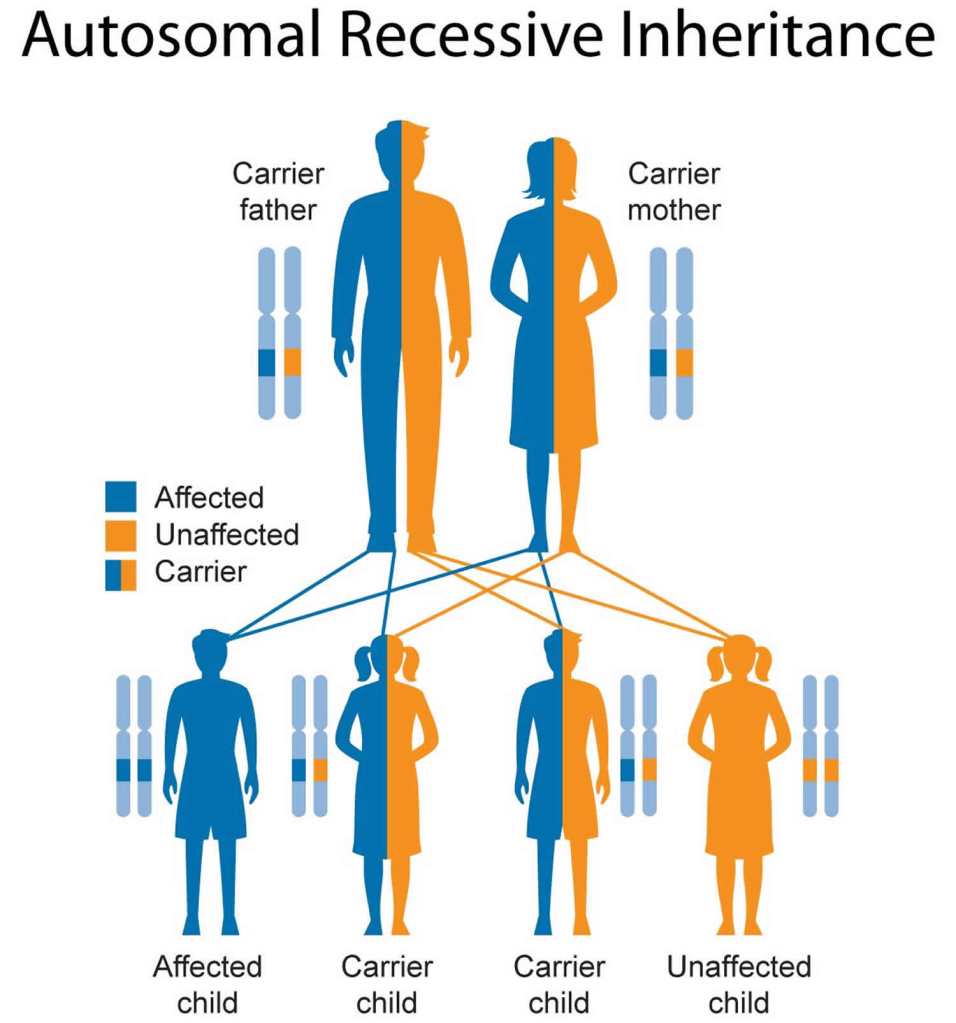
Pompe isn’t gender biased
Both women and men have an equal chance of inheriting disease-causing mutations because the GAA gene is located on one of the autosomal chromosomes, not the sex chromosomes.
Pompe disease affects about one in 40,000 newborns on average, but the incidence can vary among different geographical regions and ethnic groups. African-Americans, as well as people from southern China and Taiwan, seem to be more susceptible to Pompe disease, with rates as high as one in 14,000 in these areas.
In the United States, many states now include Pompe disease in newborn screenings, and the rates are higher than expected, with some as high as 1 in 9,000. This suggests that there may be more people with Pompe disease than previously believed.
