John
John or as many people know me Pompe Wales
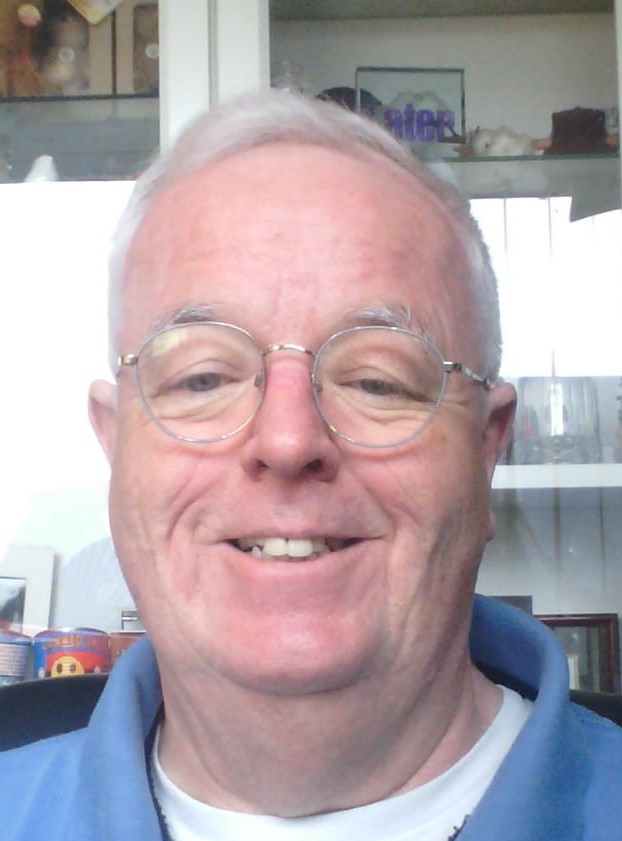
My name is John, and I was diagnosed with Pompe in September 2016 when I was 54. It’s only when you are diagnosed and see the extent of what Pompe is and does to you that you realise that you have had signs and symptoms all of your life.
The first thing that happened to me when I was diagnosed is I looked for the Pompe Disease on the web. Dr Google can be brilliant and soul destroying at the same time. There is a lot of information about POMPE but most of it is years old and full of negative information. Don’t believe the doom and gloom as it is so far from the truth.
Research the condition:
I decided to find out more about the disease and treatments. This was the start of Pompe Wales, I wanted to try and let people know what life was like with Pompe and that it doesn’t end with the diagnosis.
Look back at problems in the past:
Looking back I realised that I had always struggled to do things that my peers were doing.
I could never run properly, I knew the concept and understood the action, but my body always felt awkward.
PE in school was always a nightmare for me with both the teacher and the others in the class taking the micky out of me for struggling. I came to the point where the teacher caned me every week for 5 years for being useless at PE. It put me off sports for life. I always struggled to cross my legs and had to use my trouser leg to lift my leg up if I wanted to cross my legs.
I could never understand how people played hockey as bending over was always a struggle, it was as if my spine wouldn’t bend to allow it.
It was had to do gardening as bending over was difficult so I never helped in the garden, much to my wife’s annoyance.
Sitting in low back chairs or those without arms was difficult as I struggled to support my back causing back ache and pain, and getting out of a beanbag or soft seat must have looked like a slapstick movie scene.
I couldn’t do sit ups, something simple for most, but getting up for me was a struggle and so I was always awkward getting up from a lying position, that included getting out of bed.
Finally I slept in a chair for many years because I struggled to breathe when I was led down. This caused many issues for me as I spent many years living in hotels due to my job and rather than asking for a specific type of room I had to ask if there was a comfortable chair I could sit it. this was not always easy as many hotels only have a chair by the desk or vanity table. Sitting in bed with my legs out wasn’t an option as, for me, it caused pain in my hips and legs.
Accepting life’s limitations:
I have been really fortunate in my life to have a wonderful wife that has supported me through, what to many would have been a series of trials and tribulations, to finally being diagnosed with Pompe. As one of the most intelligent and caring people I know, she is also the most able I have ever met to keeping confidences. Without her life would be worthless.
When I was diagnosed we sat and talked, we often do, and looked at the future. Together we decided that we have to embrace the diagnosis and move on with life. Having Pompe does change your life but understanding its, and your limitations can make life easier and less stressful.
Realising the life will be different:
The first realisations were that I had to change my expectations of what I could do daily.
Tired to the point of exhaustion:
Pompe makes the muscles tired so expecting to run or walk a marathon was out of the question, but also was walking around the shops all day.
Being tired with pompe isn’t just about feeling a little tired, it’s almost like being hit with a wave of exhaustion, so often I need to have sit down or take a nap.
Struggling to breathe:
I, like many others, struggle to breathe when I am lying down and use a BiPAP machine. It sounded scary when I was first introduced to it, having to have an ‘oxygen’ style mask on my face, connected by tube to a machine by the side of the bed, but in a very short time it became normal and very reassuring. Using the BiPAP is like having a boost, after 30 minutes I feel better, less tired and capable of taking on the world again.
Chewing and swallowing:
Eating also became more difficult, not the action of eating but feeling full more quickly and after eating a meal finding it more difficult to breathe. I quickly learnt that small meals more often were better and I felt less breathless afterwards.
Accepting help:
One of the most difficult things for me was having to ask for help. It’s difficult to let someone else do things for you when you have always been independent, for example, lifting and bending down are issues as the muscle weakness in my legs make it difficult to get up without something to lean on, consequently the rule is that if it’s on the floor it stay there, unless I can use a pickup stick to reach it, but very often it has to stay there until my wife picks it up.
This has meant that my wife has had to take on more physical roles, things that I would normally have done myself. Even something as simple as getting a joint out of the bottom oven is an issue, as unless I can hold on to the top of the oven or close surface, I can’t get it out, and when I do I can only use one hand as I’m holding on with the other.
Celebrating what you can do, not what you can’t:
Nothing has changed in your mental ability or in reality your physical ability from being diagnosed to what you could do before diagnosis, you just know what the issues are. Sometimes life will feel overwhelming, it often does for everyone, we know that our limitations make it difficult to do things so do what you are good at, celebrate your successes and remain positive.
A cure and/or better treatment is on its way:
At present there is no cure but I’m positive that a cure is being found as we read this. It is out there and it will arrive soon. Every year trials to find the best treatments and a cure are going on.
 Pompe Disease