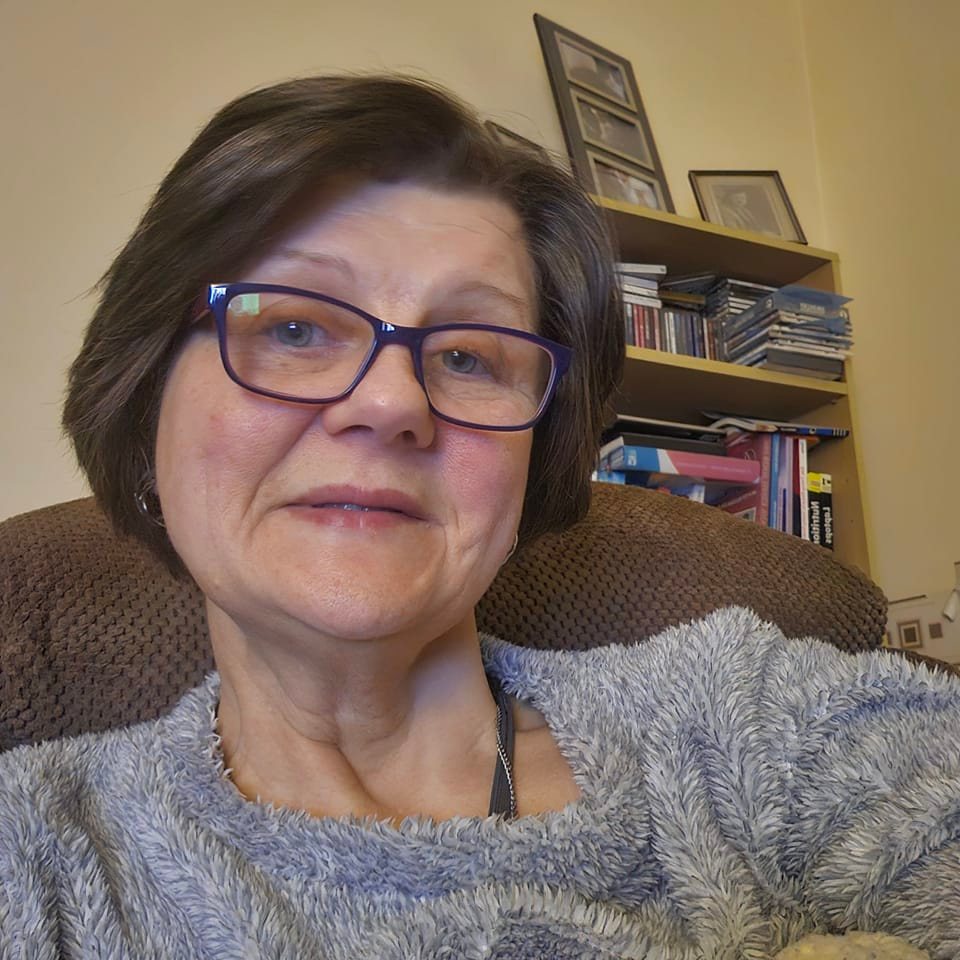
My name is Sue Davey and I have a rare metabolic condition called Pompe Disease.
Please read the information below before treating me as it might save my life.
Next of kin: Brian Davey – father – 01924 368498.
Home address: 38 Fairfield Close, Leeds, LS13 3ED
NHS no: 416 069 5337.
No other health conditions.
Consultants:
- Dr Sharma – Salford Royal Hospital
- Dr Ghosh – St James Hospital
- Dr Shambukaraja – St James Hospital
I use a wheelchair and when able a walking frame.
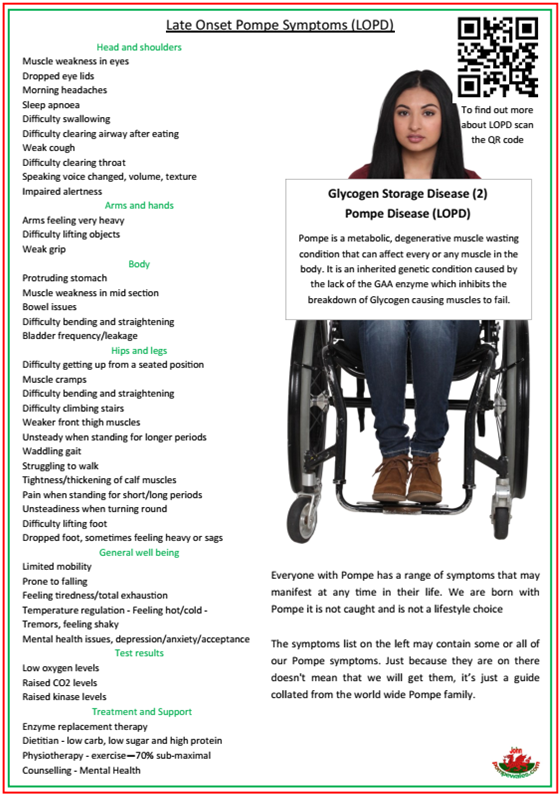
The person you are treating has Late Onset Pompe Disease. LOPD is a rare, metabolic, muscle wasting condition that causes extreme muscle weakness.
Please follow the simple steps to make life easier for the person you are treating.
This information might save their life and avoid difficulties when treating them.
- IMPORTANT
- Do not lay flat or recline too far as this may affect their ability to breathe.
- Do not give hi-flow oxygen without speaking with a respiratory consultant.
Oxygen Caution
- Respiratory Care Information
- Normal Partial Pressure of Carbon Dioxide (PC02) and
- End Tidal Carbon Dioxide (CO2): 35-45 mmHg
- Normal Oxygen Saturation (Sa02): 95 – 100%
Important: High Flow Oxygen may shut down my breathing
Do not give me oxygen before checking end tidal or blood C02 levels. A low oxyhaemoglobin saturation may indicate C02 retention and need positive pressure ventilation.
If supplemental oxygen is given continuously monitor C02 levels. Non invasive bi-level ventilation may be required.
Mechanical cough assist may be needed to clear mucus.
I will need help:
- Rising from the floor or a seat
- Standing unaided
- Walking
The symptoms of Late Onset Pompe Disease (LOPD) are listed below.
People with LOPD may have some or all of the symptoms below.
Head and Shoulders
- Muscle weakness in eyes
- Dropped eye lids
- Morning headaches
- Sleep apnoea
- Uses a BiPAP to breathe
- Difficulty swallowing
- Difficulty clearing airway after eating
- Weak cough
- Difficulty clearing throat
- Speaking voice changed, volume, texture
- Impaired alertness
Arms and hands
- Weak grip
- Struggling to hold items
- Arms feeling heavy
- Difficulty lifting arms above shoulders
Body/Torso
- Protruding stomach
- Bowel issues
- Bladder frequency/leakage
- Respiratory insufficiency/failure
- Muscle weakness in mid section
- Difficulty bending and straightening
- Continence Issues
Hips and Legs
- Difficulty getting up from a seated position
- Difficulty bending and straightening Difficulty climbing stairs
- Weaker front thigh muscles Unsteady when standing for longer periods
- Waddling gait
- Unable to stand alone
- Muscle cramps
- Struggling to walk
- Thicker calf muscles
- Tightness in calf muscles
- Pain when standing for short/long periods
- Unsteadiness when turning round
- Difficulty lifting foot
- Dropped foot, sometimes feels heavy/sags
Some users are reliant on a wheelchair or walking aid
General Well Being
- Feeling tired
- Temperature regulation – feeling hot/cold
- Tremors – feeling shaky
- Limbs feeling heavy
- Feeling totally exhausted
- Mental health – depression/anxiety
Test Results (may show anomalies in the following)
- Low oxygen levels
- Raised CO2 levels
- Raised Creatine kinase (CK) levels
Please be aware that the person may be on Enzyme Replacement Therapy (ERT).
Addition Support and Therapies
This person will also have a metabolic consultant that should be consulted prior to treatment and/or therapies.
- Enzyme Replacement Therapy
- Dietitian – High protein, low carb, low sugar
- Physiotherapist – 70% sub maximal
- Counselling – Mental Health
- Respiratory Consultant

 Pompe Disease
